
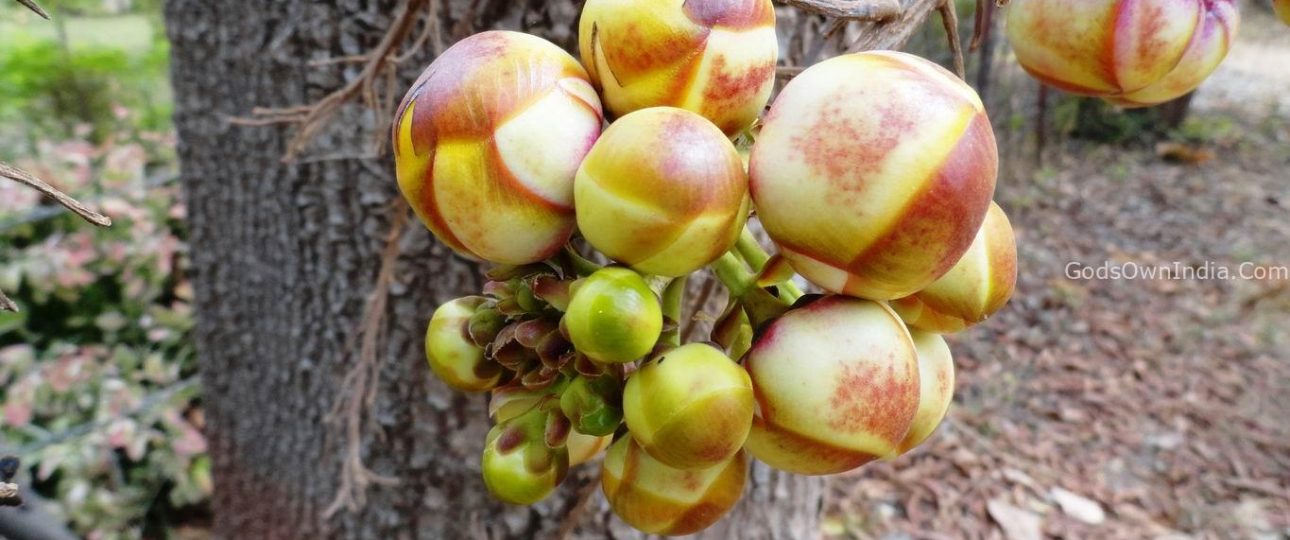
The Cannonball Tree (Couroupita guianensis), locally known in Kerala as the Nagalingam Tree, is one of the most visually stunning and spiritually significant trees in the world. From its “exploding” fruits to flowers that resemble a hooded cobra, this tree is a true marvel of nature.
What Makes the Nagalingam Tree Special?
The tree gets its name from its unique floral structure. The petals and the central stigma resemble a Shiva Lingam shielded by a Thousand-headed Naga (Cobra). Because of this, it is considered highly sacred in Hindu culture and is frequently planted near Shiva temples.
Botanical Marvels
- The Flowers: Unlike most trees, the flowers grow on tangled wooden rhizomes directly from the trunk (cauliflory). They emit a hypnotic, sweet scent, especially strong in the early morning.
- The Fruit: The large, woody spheres look exactly like rusted cannonballs. When they fall and hit the ground, they often crack open with a loud “bang.”
Spiritual and Medicinal Significance
In India, the flower is often called the Shiva Linga Pushpa. Beyond its spiritual roots, the tree is a powerhouse of traditional medicine.
- Antiseptic Properties: The leaves are used in folk medicine to treat skin diseases.
- Pain Relief: Parts of the bark and flowers are used in Ayurvedic treatments (Outward Link) to manage pain and inflammation.
Travel Guide: Seeing the Nagalingam in Kerala
Best Time to Visit
While the tree can bloom year-round in Kerala’s humid climate, the peak flowering season is from April to October. To experience the full fragrance, visit between 6:00 AM and 8:00 AM.
Where to Find Them
- Thiruvananthapuram: Kanakakkunnu Palace grounds and the Museum premises.
- Thrissur: Near the Vadakkunnathan Temple.
- Kochi: Subhash Park and areas near the Shiva Temple.
What to Expect
- Aroma: A dense, floral perfume that fills the air.
- Visuals: A trunk covered in intricate, pinkish-red waxy flowers.
- Safety Warning: Never park your car or stand directly under the fruit. A falling cannonball can weigh over 2kg and cause serious injury!
2-Day “Sacred Flora” Travel Itinerary (Kerala)
- Day 1: Thiruvananthapuram
- Morning: Visit the Museum & Zoo Gardens to see century-old Nagalingam trees.
- Afternoon: Explore the Padmanabhaswamy Temple surroundings.
- Evening: Relax at Kanakakkunnu Palace.
- Day 2: Thrissur (The Cultural Capital)
- Morning: Visit Vadakkunnathan Temple (Strict dress code applies).
- Afternoon: Visit the Kerala Forest Research Institute (KFRI) (Outward Link) to learn about tropical tree conservation.
FAQs About the Cannonball Tree
Q: Can I grow a Nagalingam tree in my garden? A: Yes, but only if you have a large space. It needs to be at least 15 meters away from any building due to its aggressive root system.
Q: Is the fruit edible? A: While not poisonous to all animals, the fruit has a very unpleasant smell when open and is generally not consumed by humans.
Q: Does it require much water? A: Young saplings need regular watering, but once established in Kerala’s climate, they are quite hardy.

#Cannonball Tree, #Nagalingam, #Kerala Tourism, #Sacred Groves, #Shiva Linga Flower, #Tropical Trees, #Medicinal Plants, #Couroupita guianensis, #Shiva Linga flower, #Nagalingam tree benefits, #Cannonball tree fruit, #sacred trees of India.