

Thailand Welcomes 14M Tourists in 5 Months
🏢 About Thailand tourism statistics
The global tourism landscape is shifting rapidly, and Thailand remains at the absolute forefront of this evolution. Welcoming over 14 million foreign visitors within the first five months of the year, the Southeast Asian paradise has demonstrated exceptional structural resilience. Despite global economic pressures, volatile fuel costs, and shifting geopolitical realities, the country remains a dominant magnetic hub for international explorers. This post breaks down the official economic statistics, analyzes the leading source markets like China and India, and highlights innovative green travel infrastructure initiatives. It offers global readers an analytical yet highly inspiring perspective on why Thailand continues to capture the hearts of millions ( Thailand tourism statistics ) worldwide.
The global travel landscape is witnessing an incredible phenomenon as Southeast Asia consolidates its position as the ultimate magnet for international travelers. Leading this monumental charge is none other than the Land of Smiles. Official data released by the Ministry of Tourism and Sports confirms that Thailand has crossed a spectacular milestone, welcoming over 14 million foreign visitors within the first five months of the year. This dramatic influx generated a staggering 679 billion Thai Baht (approximately 20.78 billion USD) in direct tourism revenue. For destination management teams, economic analysts, and passionate globetrotters alike, these figures reveal a profound story of resilience, cross-border cultural appeal, and strategic innovation.
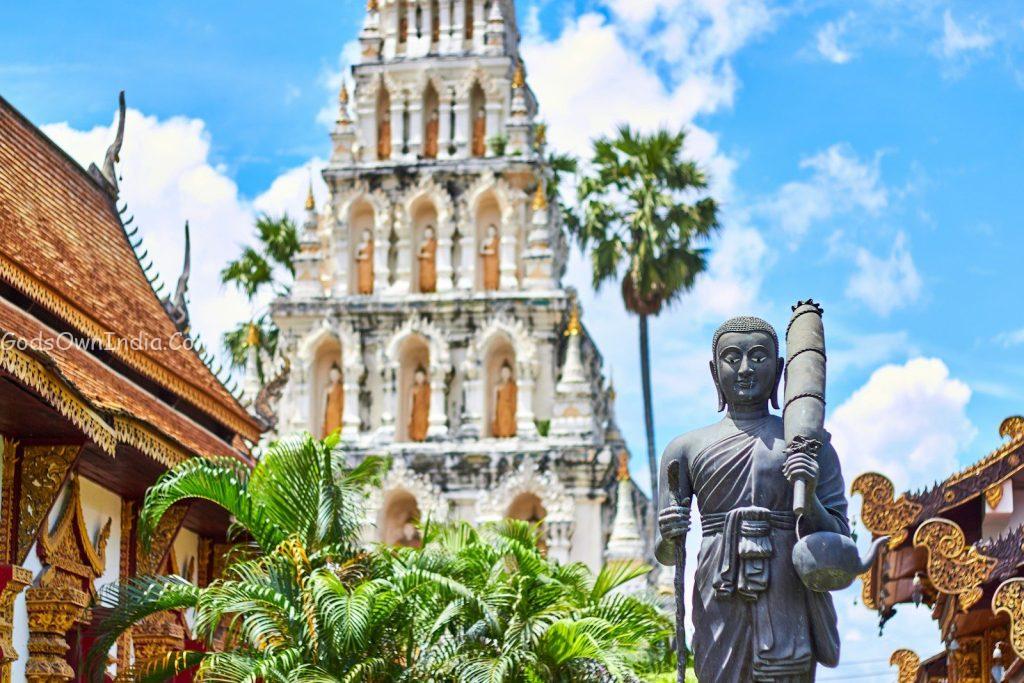
To understand why this achievement is captivating the attention of global markets, one must look closely at the underlying patterns of modern traveler behavior. Tourism is no longer just about catching a flight to a popular beach; it is a search for deep cultural connection, culinary exploration, and seamless experiential travel. Thailand has spent decades mastering this delicate balance. From the neon-lit, energetic streets of Bangkok to the serene, mist-covered mountain temples of Chiang Mai, the nation provides an expansive canvas that caters to every conceivable demographic.
#ThailandTourism #TravelTrends #GlobalTourism #ThailandTravel #AmazingThailand #BangkokTravel #Phuket #TourismEconomy #Wanderlust #TravelIndustry #ExploreThailand #SouthAsiaTravel #AsianTourism #TravelStatistics #SustainableTourism #InboundTravel #TourismBoom #GlobalEconomy #TourismRecovery #GodsOwnIndia

Thailand international arrivals , Bangkok travel trends , Southeast Asia tourism economy , Tourism Authority of Thailand TAT , Global travel recovery patterns
Decoding the Demographics: Who is Visiting?
The statistical breakdown of inbound arrivals highlights a highly dynamic shift in global travel corridors. According to official data from the Tourism Authority of Thailand, China has firmly re-established itself as the primary source market, contributing a massive 2.32 million arrivals during the five-month period. This strong recovery is heavily supported by mutual visa-waiver agreements, which have effectively eliminated structural entry barriers for holidaymakers.
Simultaneously, regional neighbors are driving unprecedented weekend traffic. Malaysia holds the second spot with 1.74 million visitors, propelled by major holiday periods, cross-border trade, and shared cultural celebrations. South Asia is also showing explosive growth, with India contributing 1.06 million tourists. The rapid expansion of direct air routes connecting major Indian metropolitan centers to Bangkok and Phuket has made the destination highly accessible for spontaneous family vacations, destination weddings, and corporate retreats. Rounding out the top five source markets are Russia, with 946,732 arrivals seeking winter refuge, and the Republic of Korea, contributing 539,848 visitors.
Navigating Global Economic and Geopolitical Currents
What makes these numbers particularly impressive is the challenging global environment in which they were achieved. The international travel industry is currently navigating substantial headwinds, including fluctuating global oil prices, increased aviation fuel costs, and inflation that limits domestic spending power in many Western nations.
Furthermore, geopolitical tensions in the Middle East have caused a noticeable 24.9% drop in arrivals from that specific region. Yet, despite these complex challenges, Thailand has effectively cushioned the impact by stabilizing its core European and American markets. Strategic growth has emerged from unexpected corners, with Scandinavian markets showing a massive surge; arrivals from Sweden grew by 14.3% and Norway by 10.9%. Eastern Europe has also responded enthusiastically, highlighted by a 16.9% increase in visitors from Poland. This demonstrates the brilliant success of Thailand’s diversified marketing strategy, ensuring that the country does not rely too heavily on any single geographic source market.
The Shift Toward Sustainability and High-Value Tourism
Rather than focusing entirely on raw visitor numbers, the Thai government is actively executing a long-term transition toward a “quality volume” model. The goal is to attract high-spending, conscientious travelers who stay longer, respect local ecosystems, and directly contribute to the preservation of indigenous cultural heritage. To gain a deeper understanding of these shifting dynamics on a global scale, industry professionals look to institutions like the UN Tourism Organization to track how sustainable frameworks are revolutionizing traditional holiday models.
A prime example of this progressive strategy in action is the joint initiative between the Ministry of Tourism and Sports and the Ministry of Transport to pioneer eco-friendly rail tourism routes. This brilliant project is designed to decongest popular, overcrowded hotspots while simultaneously driving economic growth directly into secondary, hidden provinces. Pilot rail itineraries are rolling out across three key historic regions:
- The Northern Corridor: Connecting the cultural crown jewels of Chiang Mai, Lampang, and Lamphun.
- The Southern Corridor: Unlocking the scenic, coastal beauty of Songkhla, Hat Yai, and Phatthalung.
- The Central and Eastern Corridor: Linking iconic historic landmarks across Bangkok, Ayutthaya, Samut Sakhon, Kanchanaburi, and Chonburi.
By utilizing the existing national railway infrastructure, travelers can drastically reduce their carbon footprint while enjoying intimate, slow-travel journeys through picturesque rural landscapes. This approach ensures that tourism revenue flows directly into the hands of local artisans, family-run homestays, and community-based agricultural initiatives.
The Irresistible Pull of Authentic Experiences
At its core, Thailand’s enduring global appeal rests on its unique ability to reinvent itself while remaining fiercely proud of its roots. The international travel community is no longer satisfied with generic, mass-produced holiday packages. Today’s travelers crave authenticity, and Thailand delivers this in abundance through its celebrated “Soft Power” campaigns, focusing on food, festivals, film, fashion, and fight training (Muay Thai).
The legendary culinary scene remains a massive draw, where humble street food stalls proudly sporting Michelin stars sit alongside world-class, avant-garde dining establishments. Wellness tourism has also experienced a massive post-pandemic boom. Travelers are increasingly booking extended stays dedicated to holistic detoxification, traditional Thai massage therapy, and immersive meditation retreats in secluded forest monasteries.
Global Tourism News / International Travel TrendsA Bright Horizon for Global Travel
As we look toward the remaining months of the year, the Tourism Authority of Thailand remains highly optimistic about achieving its grand target of 33 million international visitors, projected to generate a staggering 1.55 trillion Baht in foreign revenue. By continuously modernizing digital entry systems, expanding regional flight capacities, and championing green travel solutions, Thailand is creating a powerful blueprint for the future of global tourism.
For the international community, this success story is an open invitation to rediscover a country that gives back as much as it receives. It teaches us that true hospitality is an art form—one that requires constant nurturing, adaptation, and an unwavering, warm smile. Whether you are planning your very first voyage or returning to a favorite coastal sanctuary, Thailand stands ready to transform your perspective on travel, reminding us all of the beautiful, shared humanity that binds our world together.