Beyond Mandi: Unveiling the Art of the Traditional Arabian Feast
The Main Event: More Than Just Food, It’s an Experience
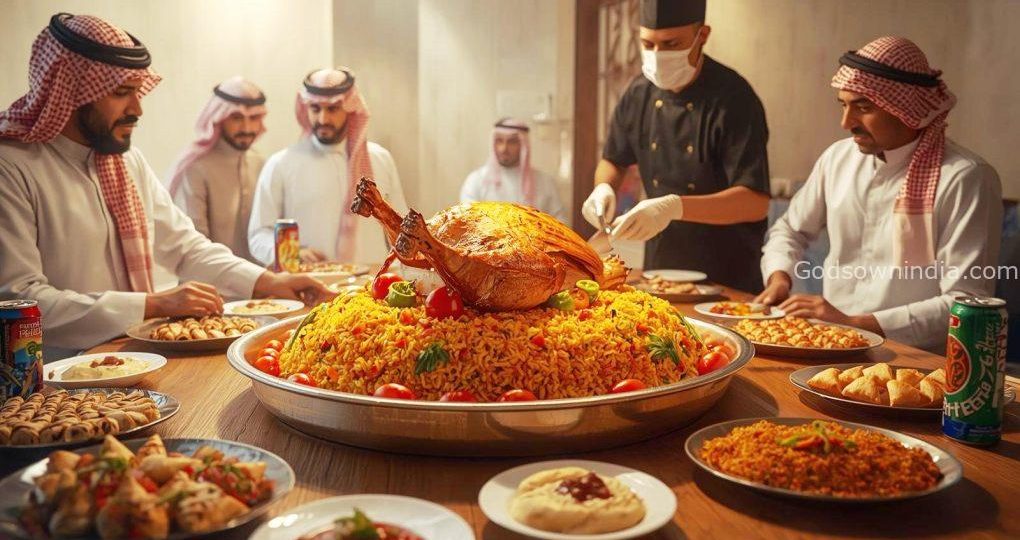
There is an old adage in the Arabian Gulf: “The guest is king.” Nothing brings this to life more vividly than standing before a traditional ‘Siniya’—a colossal communal platter laden with fragrant rice and a perfectly slow-roasted whole lamb. This isn’t just lunch; it’s a spectacle of hospitality, a cornerstone of Arabian culture, and a culinary tradition that spans centuries.
In the fast-paced world of modern dining, experiences like this ground us in the importance of connection and community.
Anatomy of the Feast: Breaking Down the ‘Siniya’
What makes this traditional Arabian feast so special? Let’s look at what is on the table (or on the rug, as tradition dictates).
- The Base: A mountain of aromatic rice. Often Basmati, it is infused with saffron, cardamom, cloves, and bay leaves.
- The Star: The centerpiece is often a whole lamb, slow-cooked in a traditional pit (making it Mandi) or simmered to perfection with spices (a preparation common in Majboos).
- The Garnish: Fried onions, golden raisins, and toasted nuts provide essential texture and sweetness.
- The Sides (Mezze): A variety of fresh elements cut through the richness of the meat. This includes Tabbouleh (parsley salad), Hummus (chickpea dip), and spicy tomato chutneys.
The Ritual of Sharing
The magic of this meal lies in how it is consumed. It is a shared, sensory experience. Traditionally, guests gather around the large platter and eat with their right hand, creating a tangible sense of equality and brotherhood.
[INSERT OUTWARD LINK 1 HERE: You can learn more about the deep-rooted customs of Hospitality in the Arab World and how it shapes dining etiquette.]
While modern settings might offer plates and cutlery, the communal spirit remains central to the experience. It is a time for slow conversation, for honoring the guest, and for celebrating the abundance of life.
Exploring the Regional Variations: Mandi, Kabsa, and Majboos
While they may look similar to the uninitiated eye, there are distinct differences between these beloved regional dishes.
- Mandi: Originating from Yemen, Mandi is famous for its smoky flavor. The meat is cooked in a special underground clay oven, allowing the juices to drip onto the rice below.
- Kabsa / Majboos: The national dish of Saudi Arabia (and widely popular across the Gulf). The distinguishing factor here is the method; the rice is often cooked with the meat, absorbing all the direct flavors from the start.
For food historians and curious cooks, exploring the intricate differences and Origins of Mandi vs. Kabsa reveals the rich culinary tapestry of the Arabian Peninsula.
Bringing the Tradition Home
While you might not be digging a pit in your backyard to roast a whole lamb, you can certainly embrace the spirit of the Arabian feast. The core principles are simple: cook with love, use aromatic spices generously, and most importantly, invite friends and family to share the meal from a single, abundant platter. It’s an unforgettable way to celebrate togetherness and taste the true flavor of hospitality.
#Mandi, #Kabsa, #Arabian Food, #Food Travel, #Communal Dining, #Saffron Rice, #Hospitality, #Mandi Rice, #Majboos vs Mandi, #Arabian Hospitality, #Middle Eastern Communal Dining