
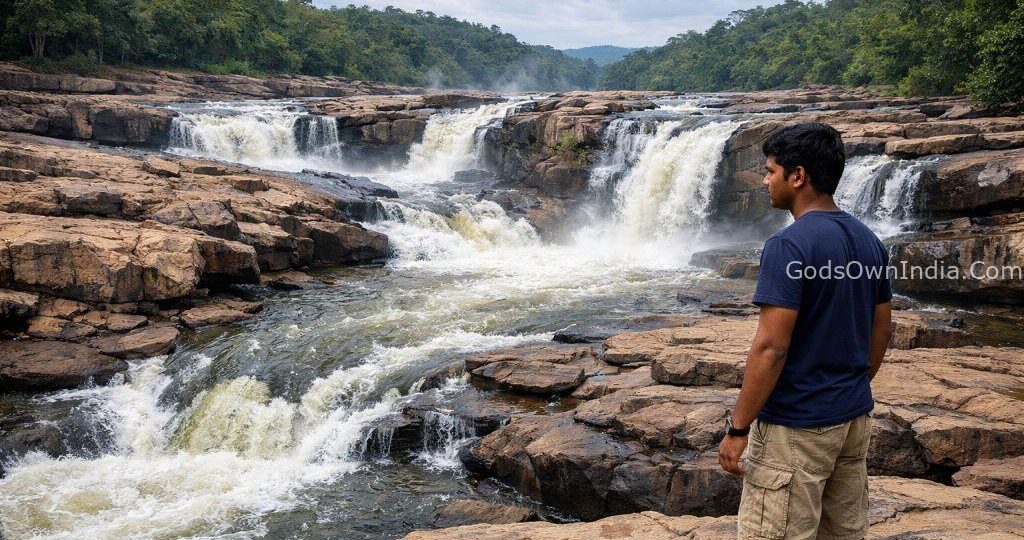
Perunthenaruvi: Kerala’s Deadly Beauty Guide
Perunthenaruvi, located in the Pathanamthitta district of Kerala, is a breathtaking natural spectacle where the water spreads wide across ancient rock beds before plunging into the Pamba River. While its name translates to “The Great Honey Stream,” suggesting sweetness and abundance, the location has gained a tragic reputation due to numerous accidental drownings and suicides. This post aims to provide an international audience with a deep understanding of why this site is uniquely dangerous, honoring the memories of those lost while educating future travelers on how to respect the powerful currents and slippery rocks of South India’s Western Ghats.
Perunthenaruvi: A Tale of Beauty and Tragedy
Kerala, often referred to as “God’s Own Country,” is home to some of the most spectacular water bodies in the world. Among them, Perunthenaruvi stands out—not for its height, but for its immense width and the way it snakes through the rocky terrain of Vechoochira.
However, for the local community and the Kerala Police, the name often triggers a sense of caution. Over the decades, the “Honey Stream” has claimed many lives, turning a place of recreation into a site of mourning.
The Hidden Dangers of the Rocky Terrain
What makes Perunthenaruvi more dangerous than other falls like Athirappilly? It is the deceptive nature of its flow. Unlike a vertical drop where the danger is visible, Perunthenaruvi flows over jagged, slippery rocks with deep underwater “wells” or pits.
- Slippery Algae: The rocks remain wet and often develop a thin layer of moss that is invisible under the rushing water.
- The Vortex Effect: During the monsoon, the water volume increases, creating powerful undercurrents and whirlpools that can trap even experienced swimmers.
- The Depth of Pathalakarandi: This specific area near the falls is known for its extreme depth and rocky crevices where bodies often get trapped, making rescue operations incredibly difficult.
A Somber History: Deaths and Suicides
The records at the local police station and reports on sites like Onmanorama highlight a pattern of tragedy. In late 2023, the community was shaken by the death of Tessy, a young mother who jumped from the falls due to domestic distress. Her story is a painful reminder of why mental health awareness is as crucial as physical safety at such landmarks.
Many deaths here are also accidental. Groups of students or tourists, unaware of the slippery shelf-like structure of the riverbed, often venture too far into the center, only to be swept away in seconds.
Why the World Needs to Know
International travelers often visit Kerala for its raw, untouched nature. While “off the beaten path” locations are trending, they come with risks that aren’t always documented in glossy travel brochures. By sharing the history of Perunthenaruvi, we aren’t discouraging tourism; we are promoting Responsible Tourism.
To understand the broader landscape of Kerala’s water safety, visitors should consult the Kerala Tourism Official Safety Guidelines, which detail the seasonal risks associated with the monsoon (June to September).
Hashtags: #Perunthenaruvi #KeralaTourism #WaterfallsOfIndia #Pathanamthitta #TravelSafety #GodsOwnCountry #HiddenGems #PambaRiver #KeralaDiaries #NatureCaution #VisitKerala #SouthIndia #AdventureSafety #StaySafe #TourismIndia #Vechoochira #WesternGhats #MonsoonKerala #LifeSafety #TravelAwareness
Safety Tips for Future Visitors
- Observe from a Distance: The best views are from the designated watch areas.
- Avoid the “Selfie” Trap: Many accidents occur when tourists try to reach the edge for a photograph.
- Heed Local Warnings: If a local resident or a guard tells you the water is rising, leave the riverbed immediately.
- Mental Health Support: If you or someone you know is struggling, organizations like Maithri Kochi offer support. No one should feel they have to face their battles alone at a waterfall’s edge.
FAQs: What You Need to Know
1. Is it safe to swim in Perunthenaruvi? Generally, no. While the water may look shallow near the banks, the rocky floor is uneven with sudden drops and strong undercurrents. It is highly recommended to stay out of the water.
2. When is the most dangerous time to visit? The monsoon season (June to August) is the most hazardous. Heavy rains in the Western Ghats can cause sudden flash floods, increasing the water level and current speed without warning.
3. Are there lifeguards at Perunthenaruvi? There are occasionally tourism guards, but the area is vast and rocky. You cannot rely on immediate rescue if you fall into the main current.
4. Why are there so many suicides at this location? The isolation and the sheer force of the falls have unfortunately made it a site for such tragedies. Local authorities are working to increase fencing and surveillance to prevent these incidents.
5. How far is Perunthenaruvi from Pathanamthitta town? It is approximately 36 km from Pathanamthitta. The route through Ranni and Athikkayam is scenic but requires careful driving on narrow roads.