
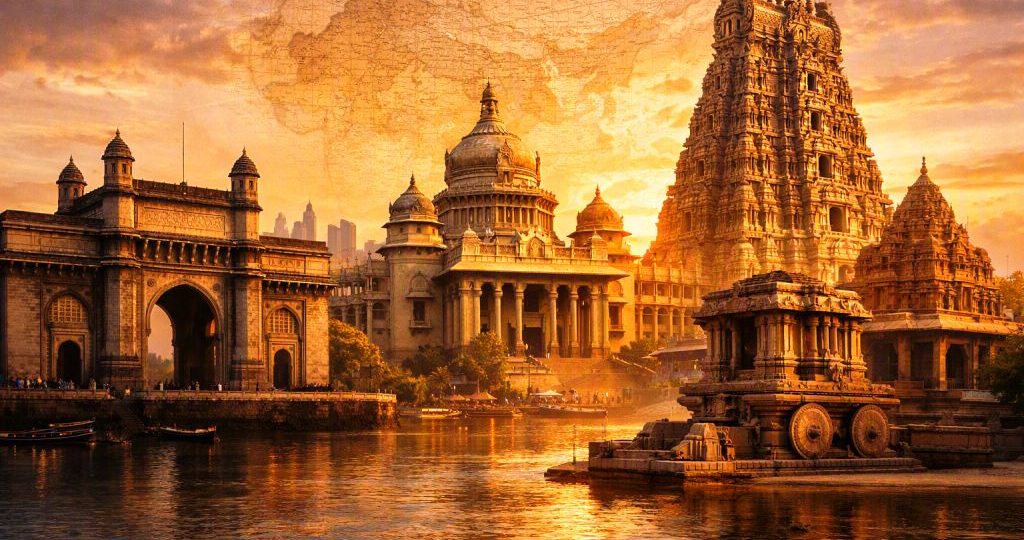
Decolonization and the Cultural Reclaiming of Indian Geography
About the Topic Renaming Indian Cities
The practice of renaming cities, states, and geographical landmarks across India represents a historic journey toward reclaiming native identity, pride, and cultural heritage. During centuries of colonial rule, local toponyms were altered or anglicized to suit foreign administrative convenience and pronunciation. Following independence in 1947, and accelerating from the 1990s onward, Indian federal and state governments systematically restored original vernacular names. Iconic metropolises transformed from Bombay to Mumbai, Madras to Chennai, and Calcutta to Kolkata. This ongoing evolution reflects a conscious effort to shed imperial legacies, honor regional languages, and present the nation’s authentic historical roots to a global audience seeking deeper geopolitical insight.
Indian city name changes , Colonial place names in India , Renaming Mumbai Chennai Kolkata , Cultural identity of India , Decolonization of Indian geography
20x Hashtags: #IndianHistory #RenamingIndianCities #Mumbai #Chennai #Kolkata #Bengaluru #KeralaHistory #IndianHeritage #CultureOfIndia #IndianGeography #ColonialHistory #IndianCulture #Prayagraj #Varanasi #Decolonization #HistoryBuff #IndiaTravel #GeographicalNames #IdentityAndHeritage #GodsOwnIndia
Renaming Indian Cities: The Journey to Cultural Identity
A name is far more than a convenient administrative label or an arbitrary postal code; it is an enduring repository of history, local folklore, linguistic nuance, and cultural dignity. Across the globe, place names serve as living monuments to a civilization’s journey. When exploring the vast geographical landscape of India, one quickly realizes that the map of this ancient land has undergone a remarkable metamorphosis over the past few decades.
To understand modern India, a visitor must look beyond the surface of its bustling metropolises and examine the historical impulses that prompted the nation to rename its most iconic cities, states, and territories. The systematic alteration of geographical names throughout the Indian subcontinent represents a profound act of cultural reclamation. It is an ongoing journey of shedding colonial legacies and reconnecting with indigenous roots that stretch back thousands of years.
Decolonization and the Cultural Reclaiming of Indian Geography
To grasp why these changes occurred, one must first look at the impact of foreign rule. During the era of the British Empire, foreign administrators struggled to pronounce the multi-syllabic, Sanskritized, Dravidian, or regional names of Indian settlements. To streamline governance and trade, the British authority anglicized local place names to fit English phonetics.
In this administrative process, rich historical meanings were lost. The sacred coastal trading hub rooted in the local patron deity Mumbadevi became ‘Bombay’. The historic settlement of Chennapattanam was condensed into ‘Madras’. The ancient riverside area of Kalighat was phoneticized into ‘Calcutta’.
While these anglicized names became globally recognized throughout the nineteenth and twentieth centuries, they remained foreign constructs to the indigenous population. When India achieved independence in 1947, the newly formed sovereign democratic republic faced the monumental task of nation-building. While initial post-independence efforts focused on economic stabilization and political integration, the late 20th century sparked a powerful wave of cultural revivalism. Changing colonial place names became a vital step toward restoring national self-respect and geographic authenticity. Readers interested in broader post-colonial transformations can explore more on Encyclopaedia Britannica.
Major Indian Cities: Their Name Changes and Historical Milestones
The movement to restore native names gathered momentum in the mid-1990s, completely reshaping the geopolitical vocabulary of the subcontinent. The following comprehensive breakdown highlights the most significant urban renamings, their old colonial titles, their restored native names, and the exact years these changes were officially enacted:
| Colonial / Old Name | Restored Native Name | Year Enacted |
|---|---|---|
| Bombay | Mumbai | 1995 |
| Madras | Chennai | 1996 |
| Calcutta | Kolkata | 2001 |
| Bangalore | Bengaluru | 2014 |
| Allahabad | Prayagraj | 2018 |
| Gurgaon | Gurugram | 2016 |
| Baroda | Vadodara | 1974 |
| Pondicherry | Puducherry | 2006 |
| Aurangabad | Chhatrapati Sambhaji Nagar | 2023 |
| Poona | Pune | 1978 |
| Benares | Varanasi | 1956 |
| Gauhati | Guwahati | 1983 |
| Faizabad | Ayodhya | 2018 |
| Osmanabad | Dharashiv | 2023 |
The Transformation of Metropolitan Powerhouses
The year 1995 marked a monumental shift when the state government of Maharashtra officially declared that Bombay would henceforth be known as Mumbai. Named after Mumbadevi, the guardian goddess of the native Koli fishing community, the change sent a clear message: the city belonged to its historical heritage, not its colonial architects.
Following Mumbai’s lead, Tamil Nadu renamed Madras to Chennai in 1996. The name Chennai derives from Damal Chennappa Nayakar, a ruler who governed the region prior to British arrival. In 2001, West Bengal transformed Calcutta into Kolkata, aligning the city’s official title with its Bengali pronunciation derived from the historical village of Kalikata.
Similarly, India’s modern technology hub, Bangalore, officially became Bengaluru in 2014. Inscriptions dating back to the ninth century reference the region as Benda-kaalu-uru (the town of boiled beans), proving that the name Bengaluru existed centuries before the East India Company set foot in the region.
Kerala: Preserving Vernacular Authenticity in God’s Own Country
In South India, the coastal state of Kerala—often celebrated globally as “God’s Own Country”—undertook its own systematic program to correct colonial distortions in place names. Foreign traders, including the Portuguese, Dutch, and British, had truncated and altered coastal port names for ease of commerce. In 1990 and 1991, the state government rectified these spellings to reflect authentic Malayalam pronunciation:
- Trivandrum to Thiruvananthapuram (1991): The state capital returned to its ancient name meaning “The Abode of Lord Ananta”.
- Cochin to Kochi (1996): The bustling queen of the Arabian Sea dropped its colonial suffix to honor its native Malayalam root.
- Calicut to Kozhikode (1996): The historic port where Vasco da Gama landed shed its Westernized moniker, returning to Kozhikode, meaning “Fort of Cocks”.
- Quilon to Kollam (1990): The ancient spice trading port re-established its historic identity.
- Cannanore to Kannur (1990): The northern coastal district reclaimed its traditional title.
- Trichur to Thrissur (1990): The cultural capital of Kerala restored its name, derived from Thiru-Siva-Per-Ur (The City of Sacred Lord Shiva).
- Alleppey to Alappuzha (1990): The world-famous backwater destination restored its native name, signifying the land between the sea and the rivers.
State and Territorial Renamings Across the Subcontinent
The journey of renaming extended well beyond city borders to encompass entire states and union territories through constitutional amendments passed by the Indian Parliament:
- United Provinces to Uttar Pradesh (1950): Transitioned from an administrative division title to a proper territorial name.
- Madras State to Tamil Nadu (1969): Renamed to mean “The Land of the Tamils,” honoring linguistic federalism.
- Mysore State to Karnataka (1973): Reclaimed the ancient regional name derived from Karunadu (Elevated Land).
- Laccadive, Minicoy, and Amindivi Islands to Lakshadweep (1973): Unified under a Sanskrit name meaning “A Hundred Thousand Islands”.
- Uttaranchal to Uttarakhand (2007): Reverted to the traditional name meaning “Northern Land”.
- Orissa to Odisha (2011): Amended alongside changing the language designation from Oriya to Odia to align with native phonetics.
For detailed insights into official gazette notifications and administrative policies governing geographical modifications, visit the official portal of the Ministry of Home Affairs, Government of India.
Why These Geographical Changes Matter to the World
To global travelers, researchers, and historians, these name changes offer profound insights into modern geopolitical evolution. Renaming a city is a complex, costly administrative undertaking requiring updates to global aviation codes, postal networks, maps, legal records, and international diplomatic directories.
The decision to execute these changes demonstrates a nation’s commitment to self-determination. It reminds the world that geography is intimately connected to human dignity. By shedding imposed titles and embracing indigenous names, India invites the global community to engage with its heritage on its own authentic terms.
Conclusion
The evolution of Indian geographical names stands as a testament to the nation’s resilience, self-respect, and cultural richness. From Mumbai and Chennai to Bengaluru and Thiruvananthapuram, every name restored is a bridge connecting the modern republic to its glorious past. As global citizens explore India today, understanding these historical transformations allows for a deeper appreciation of a civilization that honors its history while stepping boldly into the future.