Ma’nene: The Indonesian Ritual of Cleaning the Dead
Ma’nene: The Bizarre and Beautiful Indonesian Ritual of Exhuming and Cleaning the Dead
For many cultures, death marks a definitive end—a final separation of the physical body from the living world. However, in the lush highlands of South Sulawesi, Indonesia, the Toraja people embrace a completely different perspective. Death is not an ending but a significant transition, and the bonds between the living and the deceased are maintained with profound respect, love, and a ritual known as Ma’nene.
This fascinating tradition, which often seems shocking or unsettling to the outside world, is a powerful expression of filial piety and the Toraja’s unique worldview. If you’re looking to understand one of the world’s most unique cultural practices, here is everything you need to know about Ma’nene.
The Meaning Behind Ma’nene
The word “Ma’nene” roughly translates to “Cleaning of the Corpses.” It is a vital component of Torajan life, deeply intertwined with their belief system, known as Aluk To Dolo (Way of the Ancestors). In this worldview, the spirits of the deceased continue to exist in a spiritual realm (known as Puya or the Land of Souls) and remain close to their families.
The Ma’nene ritual is not a morbid obsession with the dead but a celebration of life and a display of enduring love. It is a time for families to care for their ancestors, reunite with them, and ensure their well-being in the afterlife. It is believed that by properly caring for the deceased, the ancestors will bestow blessings and protection upon the living.
The Ritual in Process
Ma’nene is typically held after the harvest season, which usually falls in the month of August. This timing is symbolic, marking the end of the agricultural cycle and the beginning of a period dedicated to spiritual connection. Here is a breakdown of the key steps:
1. Exhumation from Ancestral Tombs:
Torajan burials are themselves unique. They use rock-carved graves (often high up on cliffs), hanging coffins, or specially constructed houses called Tongkonan. During Ma’nene, family members gather at these ancestral sites. With great reverence, the bodies are carefully removed from their coffins.
2. Preservation of the Bodies:
You might wonder how these bodies can be exhumed and handled years after death. The Torajans are masters of natural mummification. Their traditional practice involves a specific type of plant-based resin and oils, and more recently, the use of formaldehyde, which inhibits decomposition. Coupled with the cool mountain climate, these methods allow bodies to remain preserved, albeit in a mummified state, for decades.
3. Cleaning and Dressing the Dead:
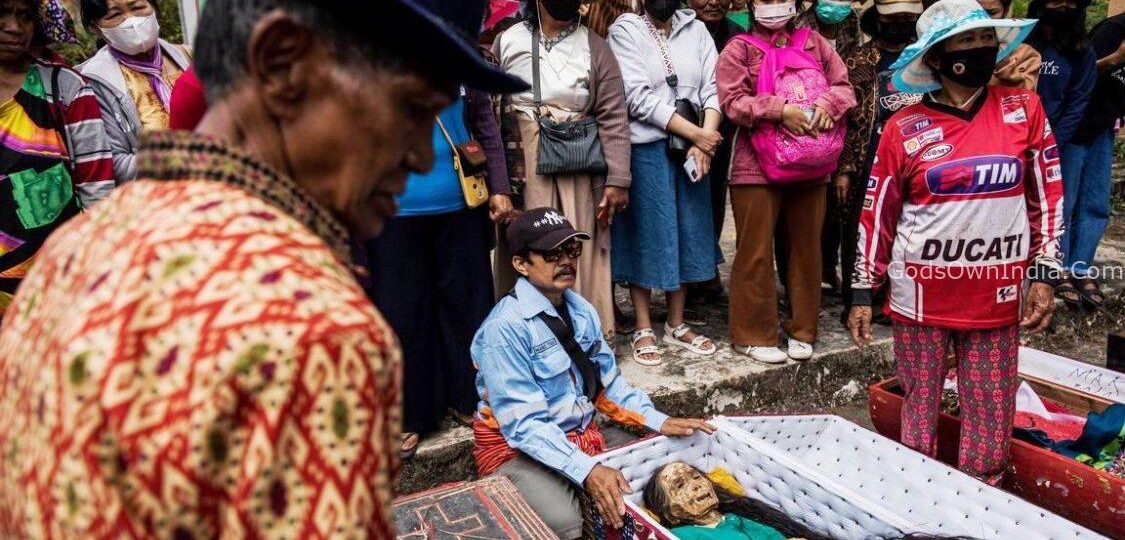
This is the central part of the ritual. With immense tenderness, the bodies are brushed clean of dust and debris. The family then performs a comprehensive makeover. The mummies are dressed in entirely new outfits—vibrant traditional clothing, stylish western wear, and even accessories like eyeglasses, hats, watches, and jewelry. The goal is to make the deceased look their absolute best, just as they did in life.
4. Socializing and Family Reunion:
This stage is the most poignant for the family. Once dressed, the mummies are treated as though they are still alive. Family members talk to them, share news, and pose for photographs. It is a moment of profound connection, a family gathering that spans the divide between life and death. The air is filled not with mourning, but with a palpable sense of love and celebration.
5. Returning to the Crypt:
After the festivities and the precious time spent together, the bodies are carefully wrapped and returned to their coffins and their final resting places. The families bid their ancestors farewell, secure in the knowledge that the bond remains strong.
The Bigger Picture: Torajan Funeral Customs
Ma’nene cannot be fully understood without the context of the larger Torajan funeral customs, which are some of the most complex and expensive in the world.
- Funerals that Last Days: A traditional Torajan funeral, known as Rambu Solo, is a major societal event that can last for days or even weeks. It involves elaborate rituals, traditional dances, and significant sacrifice.
- The Importance of Buffaloes: Water buffaloes are a central component of Torajan society and funerals. The number of buffalo sacrificed at a funeral is a direct reflection of the deceased’s social status and wealth. It is believed that the souls of the sacrificed buffaloes help the deceased on their journey to Puya.
- The Tongkonan: These are the distinctive, boat-shaped ancestral houses of the Toraja, which play a central role in all major family and social rituals. The construction and maintenance of a Tongkonan is a multi-generational commitment.
For more information about the historical background and cultural significance of these unique funeral practices, you might find this detailed article about Torajan Funeral Customs on Wikipedia to be very enlightening. Additionally, National Geographic provides an incredible visual exploration and narrative of this culture in their feature, The Toraja of Indonesia.
Conclusion: A Celebration of Life and Family
The Ma’nene ritual is a powerful reminder that our connection to the past and our ancestors is vital. While it might appear jarring to a Western eye, it is born out of a philosophy where death is not feared, but integrated into the rhythm of life. It’s a testament to the enduring power of family, love, and the belief that the bonds we form in this world are not easily broken, not even by death itself.
The Torajans’ Ma’nene ritual is a profound and beautiful cultural legacy that continues to teach the world a different way to view the final chapter of life.
#Ma’nene, #Toraja, #Indonesia, #South Sulawesi, #Funeral Ritual, #Ancestor Worship, #Mummies, #Cultural Traditions, #Aluk To Dolo, #Travel Experiences, #Asia, #Toraja death ritual, #cleaning of the corpses Indonesia, mummies of South Sulawesi, #Toraja funeral traditions, #Indonesian ancestor veneration, #Aluk To Dolo, #South Sulawesi cultural practices.