
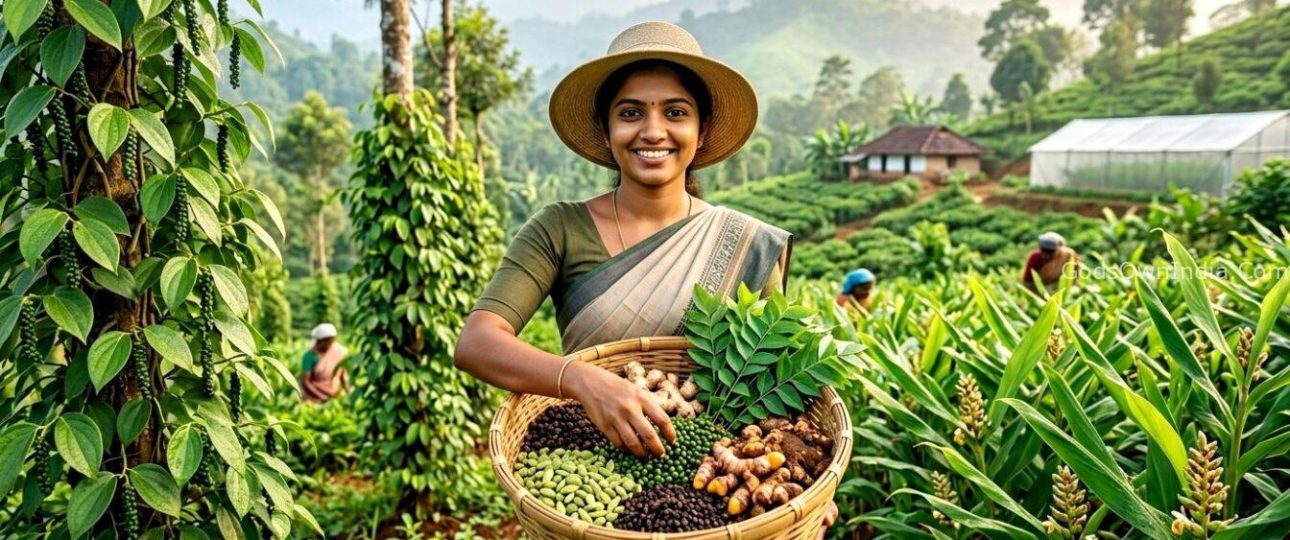
Kerala’s Aromatic Treasures in 2025: Which Spices Are Grown Where & Why Youth Are Joining Spice Farming
Introduction to Kerala’s Spice Legacy
The Fragrant Heritage: A Guide to Aromatics and Spice Farming in Kerala
Kerala, famously known as the “Spice Garden of India,” has been the heart of the global spice trade for centuries. From the mist-covered hills of Idukki to the fertile plains of Ernakulam, aromatics—which include herbs, spices, and fragrant vegetables—form the backbone of our culinary and economic identity.
In 2025, Kerala continues to be known as the “Spice Garden of India”. From the famous Malabar pepper to the aromatic cardamom of the Cardamom Hills, the state produces some of the world’s finest spices. But beyond tradition, a new trend is emerging – the youth are showing genuine interest in spice farming, thanks to organic practices, value addition, and strong government support.
What Exactly are Aromatics?
In the world of cooking and botany, aromatics are plants that provide the foundational scent and flavor of a dish. We can break them down into three main categories:
- Herbs: The fresh, leafy parts of plants like Coriander, Mint, and the quintessential Curry Leaf.
- Spices: Dried seeds, bark, or roots such as Black Pepper (the King of Spices), Cardamom (the Queen), and Turmeric.
- Aromatic Vegetables: Onions, Garlic, and Ginger—the trio that starts almost every Malayali curry.
Where Does the Magic Grow? (Mapping Kerala’s Spices)
If you are looking to source or study these crops, specific districts in Kerala specialize in different varieties:
- Idukki & Wayanad: The high altitudes here are perfect for Cardamom and Black Pepper.
- Ernakulam & Thrissur: These river-rich areas are famous for Nutmeg and Mace.
- Palakkad: Known for its vast stretches of Ginger and Turmeric cultivation.
For those interested in the scientific side of these plants, the Aromatic and Medicinal Plants Research Station (AMPRS) in Odakkali, Kerala, is a pioneer in research and development.
The New Wave: Young Farmers and Agriprenuers
Is spice farming a dying art? Far from it! A new generation of Keralites is breathing life into this sector. Today’s “New-Gen” farmers aren’t just growing crops; they are building brands.
Current Trends in Kerala:
- Value-Added Products: Instead of selling raw spices, youth are moving into essential oil extraction and organic spice powders.
- Organic Certification: There is a massive global shift toward organic aromatics, and Kerala’s farmers are leading the way.
- Hi-Tech Farming: Use of precision irrigation and poly-houses is making farming more attractive to tech-savvy youngsters.
According to the Spices Board of India, Kerala continues to contribute significantly to India’s spice exports, thanks to these modern sustainable practices.
Major Spices Grown Commercially in Kerala (2025 Update)
According to the latest data from the Spices Board of India, Kerala remains a leader in high-value spices even as national pepper production faces weather challenges.
- Black Pepper (King of Spices) – Kerala still contributes significantly despite a national decline in 2024-25. Read latest production statistics on Spices Board India →
- Cardamom (Queen of Spices) – Kerala accounts for nearly 70-75% of India’s small cardamom production (22,869 tonnes in 2025).
- Nutmeg & Mace – Kozhikode and Malappuram districts are national leaders.
- Cloves & Cinnamon – Grown widely in Idukki and Wayanad.
- Ginger & Turmeric – Wayanad, Idukki and Kozhikode are major hubs, with strong demand for organic varieties.
- Curry Leaves – Found in almost every home garden across the state.
Top Spice-Producing Districts in Kerala (2025)
| Spice | Leading Districts |
|---|---|
| Black Pepper | Idukki, Wayanad, Kannur, Kozhikode, Malappuram |
| Cardamom | Idukki (Cardamom Hills – 70%+), Wayanad, Pathanamthitta |
| Nutmeg & Mace | Kozhikode, Malappuram, Thrissur |
| Ginger & Turmeric | Wayanad, Idukki, Palakkad, Kozhikode |
Why the New Generation is Interested in Spice Farming
The youth of Kerala are no longer only migrating to IT jobs. Many young engineers and graduates from Kozhikode, Idukki and Wayanad are launching organic spice startups, value-addition units and direct-to-consumer brands.
Programmes like the ICAR-Indian Institute of Spices Research (IISR), Kozhikode are playing a big role through internships, ideathons (“Rise Up 2.0”), the SPIISRY initiative, and training in climate-resilient varieties.
Organic certification, e-commerce, and premium export prices for GI-tagged Malabar pepper and Alleppey cardamom are making spice farming attractive again.
Challenges & Bright Future
Traditional farmers still face price fluctuations, diseases, and climate issues, but the combination of government schemes, research support from IISR Kozhikode, and youth entrepreneurship is creating a positive shift in 2025-26.
Conclusion: Time to Join Kerala’s Spice Revolution?
Whether you are a farmer, student, or entrepreneur, Kerala spice farming offers huge potential in 2025. The legacy is strong, the market is growing, and the new generation is ready to take it forward.
Have you tried growing any Kerala spices? Share your experience in the comments!
God’s Own Country is truly the Spices’ Own Home. 🌱✨
Kerala Spices, Aromatics, Herb Garden, Organic Farming, Wayanad, Idukki, Sustainable Agriculture.Spices of Kerala, Herbs cultivation, Organic spice farming, Idukki Cardamom, Kerala agriculture trends.